

★ Est. 1868
One hundred and Forty-nine years OF SEPTEMBER
From a two-day livestock show on the Crystal Palace lawn to London's most beloved autumn tradition — this is the story of the Western Fair, told in images.
1868
First Fair
149
Years of Tradition
10
Days Each September
This photo gallery covers the last 149 years.
Enjoy your walk through time
1868
The very beginning
Crystal Palace Barracks · Downtown London
★ The Founding
Two societies, one vision
Late in 1867, the Western Fair Association was founded through the amalgamation of the East Middlesex Agricultural Society and the London District Horticultural and Agricultural Society.
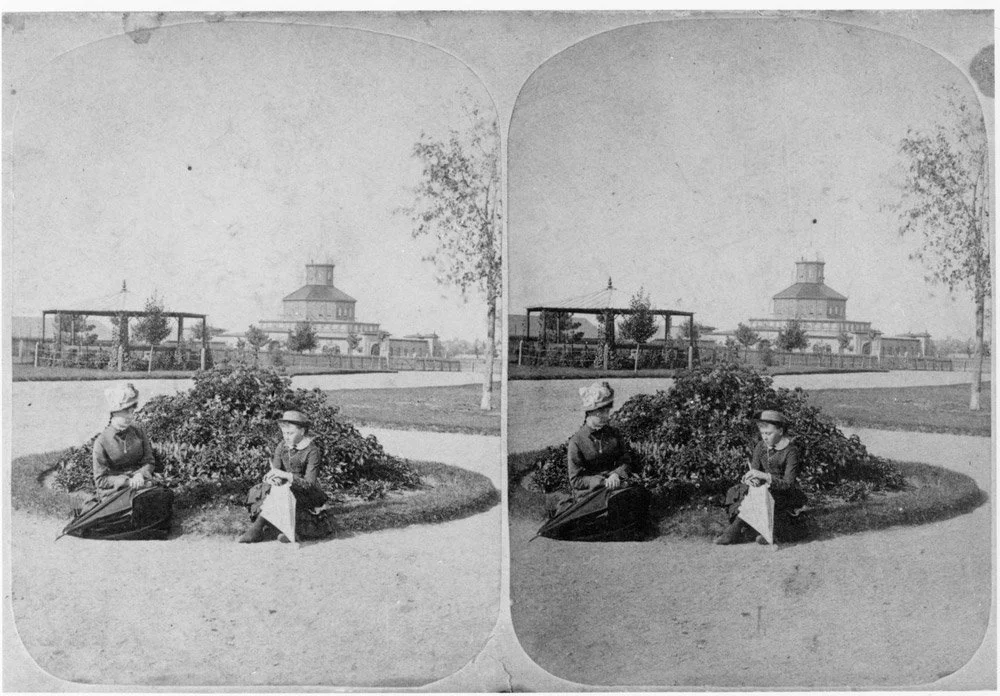
The first official meeting was held in 1868, and the very first Western Fair — predominantly livestock shows — was held on September 29 & 30 on the lands surrounding the Crystal Palace Barracks, just north of today's Victoria Park.


★ A New Home
Moving to Queens Park
Shortly thereafter the fair moved east of Adelaide Street to the beautiful Old East Village neighbourhood — to what was known as Salter's Grove, now called Queens Park. A spectacular new Crystal Palace exhibition pavilion was built on this location by 1887.
You can see the Queens Park gate in 1895, with street cars running in front — and the Crystal Palace in 1912, fifteen years before it was lost to fire in January 1927.
1898
The golden age of exhibition
Ten days of industry, agriculture & art
★ Ten Days Strong
The fair finds its rhythm
By 1898 the Western Fair spanned 10 days, as it still does today, highlighting industrial and art exhibitions. Throughout its history, industry and arts exhibits were the mainstay of the fair.
One could partake in agricultural competitions — horses, cattle, sheep, swine, poultry, rabbits, field crops and grains, garden vegetables, dairy, honey and maple syrup, fruit and flowers — as well as fine arts, ladies' work, and household sciences, all for prize money and ribbon-winning reputations.

The Western Fair was an exciting and prestigious community celebration. It was THE place to see and be seen


★ A Dressy Occasion
Horses, industry & innovation
Horse competitions were vast in the early days, as horses were integral to farming and transportation — light Standardbred and thoroughbred, harness and roadster classes, carriage ponies and heavy horses.
Equipment displays like the 1918 tractor exhibit were a vital part of agri-business — not unlike the farm shows of today. Many came from far and wide to see the latest innovations and make decisions to better their farming operations.


1915
The great Grandstand
The main stage of spectacle & entertainment
★ Rebuilt in Steel
Rising from the ashes
The great Grandstand was the main stage of entertainment and thrilling spectacles at the Western Fair. In 1915 it was reconstructed out of steel to replace the wooden one that burned down on Christmas Day, 1914.
Built significantly smaller than the previous Grandstand, it still stands in the same location and continues to operate today — more than a century later.


★ Spectacles & Stars
From bicycle thrills to TV stars
The Grandstand showcased horse racing and horse shows, cattle competitions, military displays, and spectacular attractions of the day — like this remarkable 1922 bicycle thrill show.
Over the years the Grandstand has featured a wide variety of entertainment, including many stars of stage, screen, and television.
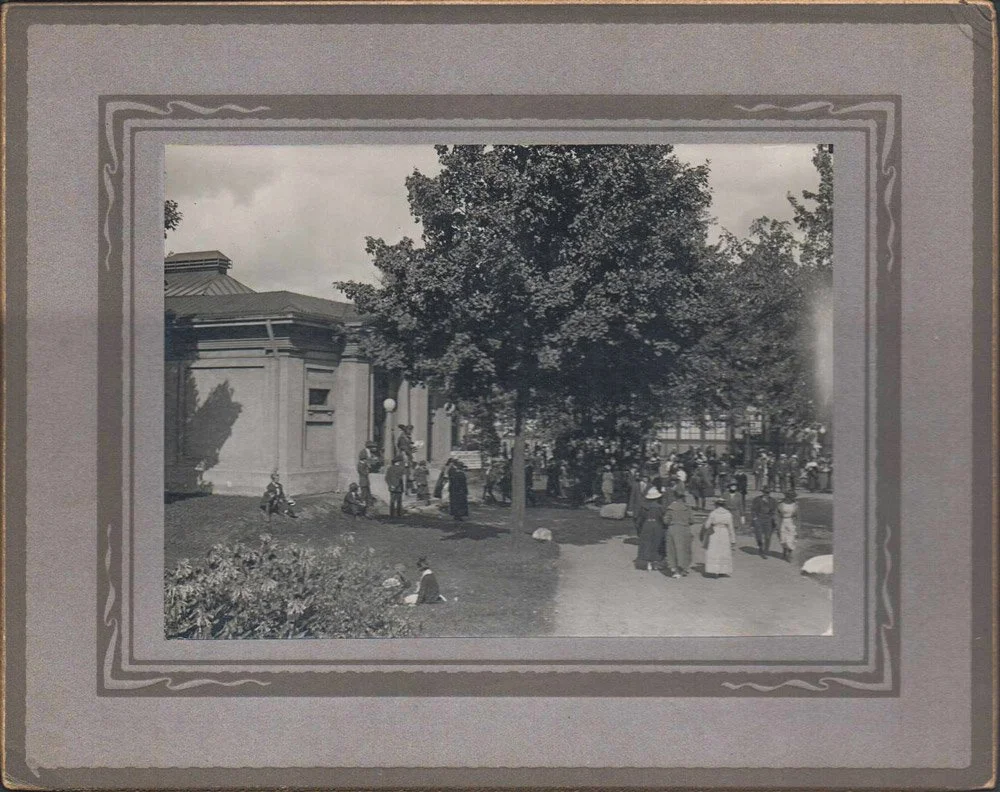
London's first art gallery — the Western Fair Arts Building, constructed in 1928, was considered one of the foremost art exhibit buildings in existence.
1976
The thrill of the midway
Fun and adventure for young and old alike
★ Independent Operation
A midway of our own
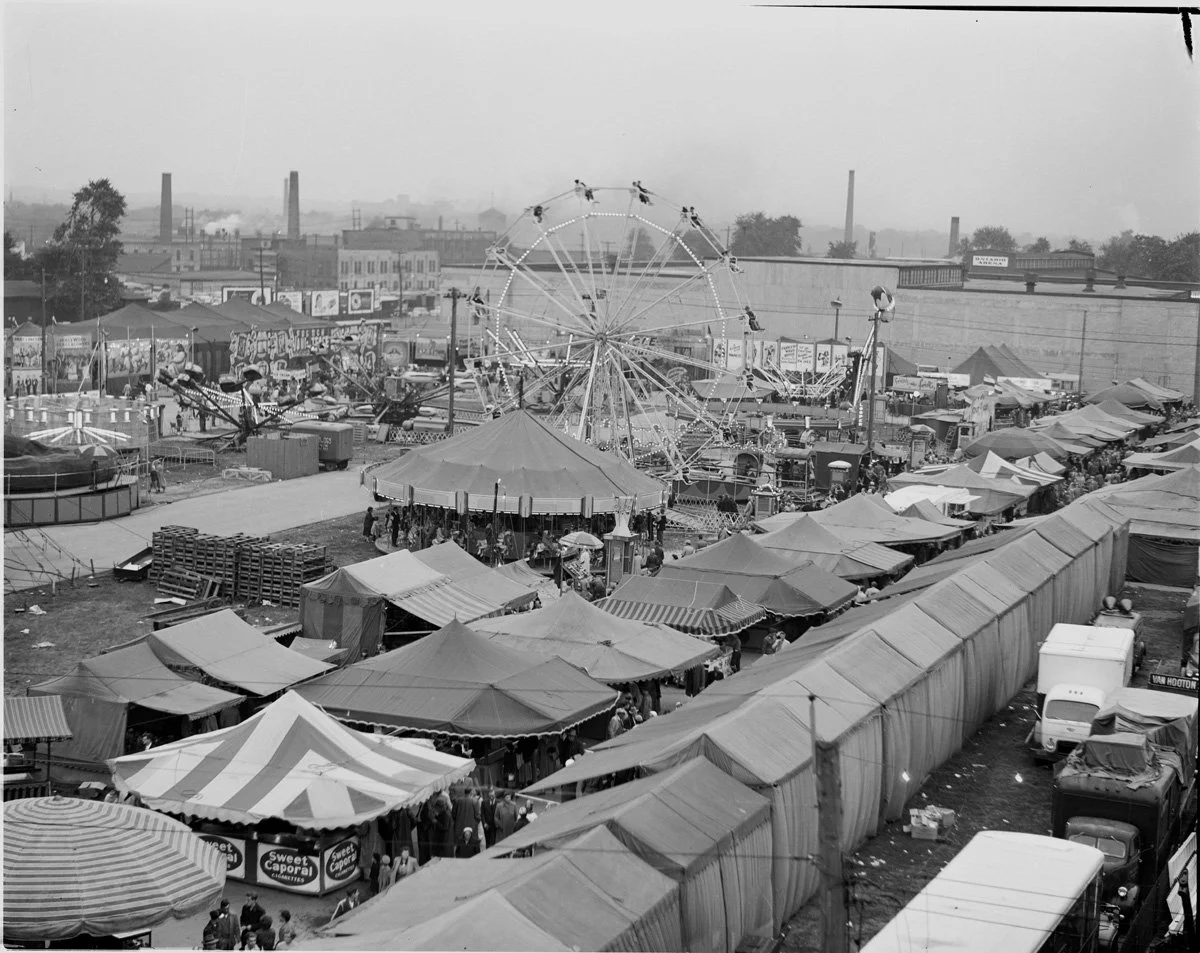
A thrilling component of the fair's allure was — and is — the tremendous fun to be had on its midway. In the early days, rides and games were run by midway operators, but by the 1960s the Western Fair began its own independent midway operation.
This was a unique achievement at the time, managing the contracting of independent ride owners to operate specific rides so that Western Fair could curate a variety of new experiences ride fans were looking for alongside the traditional favourite, control ticketing, customer experience, and safety.

An aerial view of Western Fair District, 1955
In 1976, the Zyclon Roller Coaster was purchased by the Western Fair — and was the top-grossing midway ride for many, many years


★ The Coaster Legacy
From the Zyclon to the Crazy Mouse
The Zyclon was installed on the main lot to augment the independent midway experience. Operational only during the annual fair, it remained the top-grossing ride for decades.
Today, the fair's midway provider North American Midway Entertainment brings the Crazy Mouse coaster, erecting it every year for 10 days – one of the most-loved rides on the midway each September.


1942
War, pause & revival
The fair's resilience through hard years
★ The War Years
A training depot, a fair paused
The vast majority of major changes to the Western Fair took place since World War II. During the nine-year war period, the fairgrounds became an army manning and training depot. Many buildings were torn down and temporary army buildings erected.
Naturally, this was a period when the annual Western Fair was cancelled in light of the war effort — the first cancellation in its history.

Artillery practice on the fairgrounds during WWII

★ Bigger & Better
The post-war comeback
After the war, loyal directors and volunteers kept interest in the fair alive. In late 1947, when portions of the grounds were returned to the Western Fair Association, an even bigger and better fair was planned for 1948.
By 1950, the fair regained momentum at 6 days long, offering agricultural exhibits, butter and cheese displays, health and hobby exhibits, plus new industrial and store displays.
The 2020 Western Fair was the first since World War II to be cancelled — this time by a worldwide pandemic. We couldn't wait to be together again
1989
The modern fair
Agriculture, education & evolution
★ Livestock 2000
A new vision for agriculture
As the agricultural industry continued to change, in 1989 the Western Fair inaugurated a radical new concept for its competitive livestock display called "Livestock 2000."
It took the bold step of emphasizing agricultural awareness programs rather than livestock competitions — and the fair remains proud of the agricultural programming and education it offers school children and attendees every year.


The agricultural barns remain a fair favourite


Always
The people behind the magic
Volunteers, staff & fair fans like you
★ The Secret Ingredient
Built by the community
The people who administer and operate the Western Fair are the 'secret' behind its successful longevity. The Association is formed by a completely volunteer membership which elects a board to oversee its responsibilities.
Today, a dedicated and passionate staff work alongside the Board and volunteer membership to deliver the Western Fair every year. All generations have made great contributions — not just to the fair, but to the city of London and southwestern Ontario.


Our loyal customers and new attendees who fall in love with the fair each year — you too are part of the eternal magic of the fair


★ The story continues
And we're so looking forward to the future — with all of you
Thank you to every fair fan who has supported the Western Fair year after year.
The next chapter begins September 11–20, 2026.